

User Experience Study
Case Study
2025
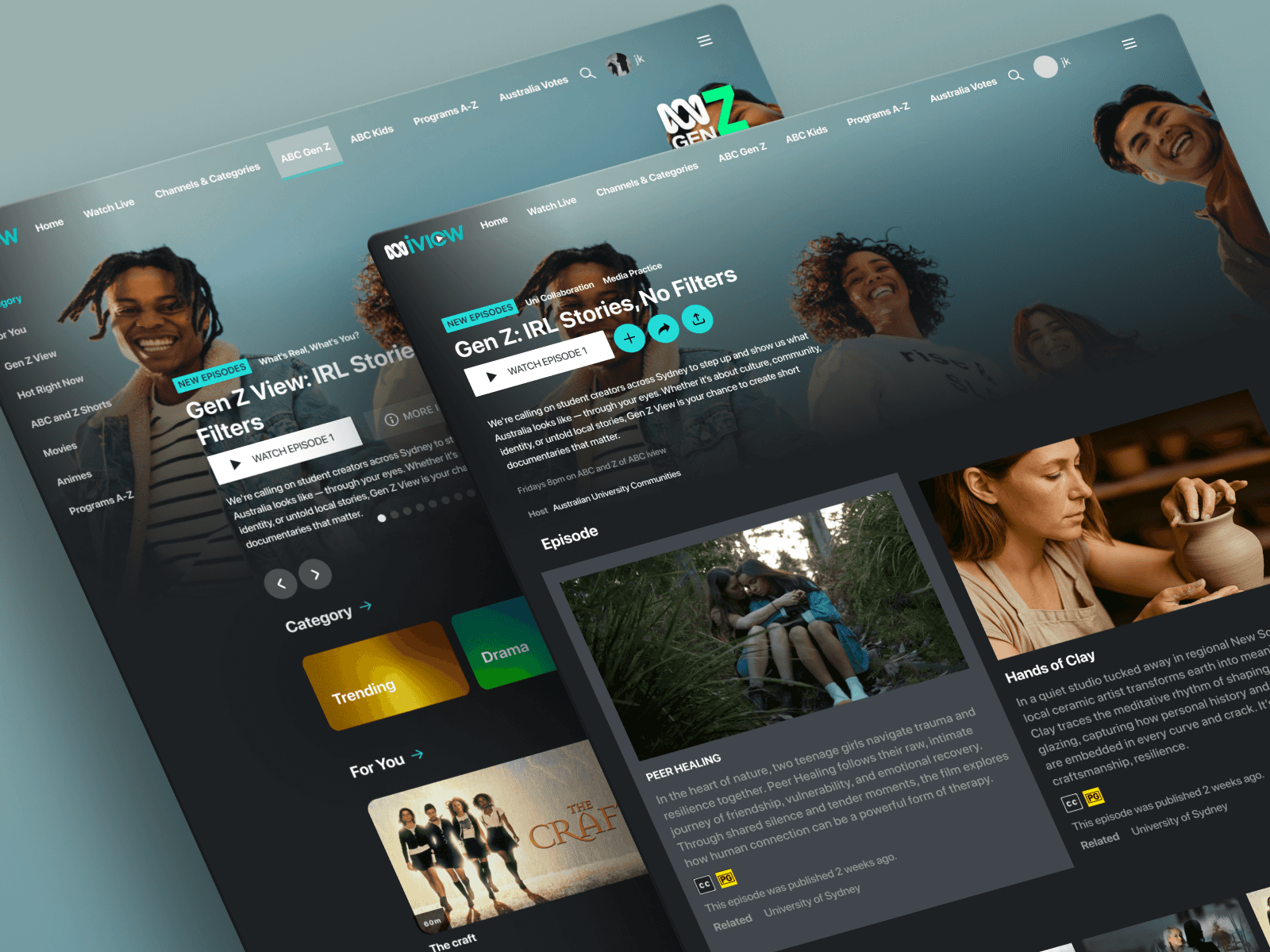
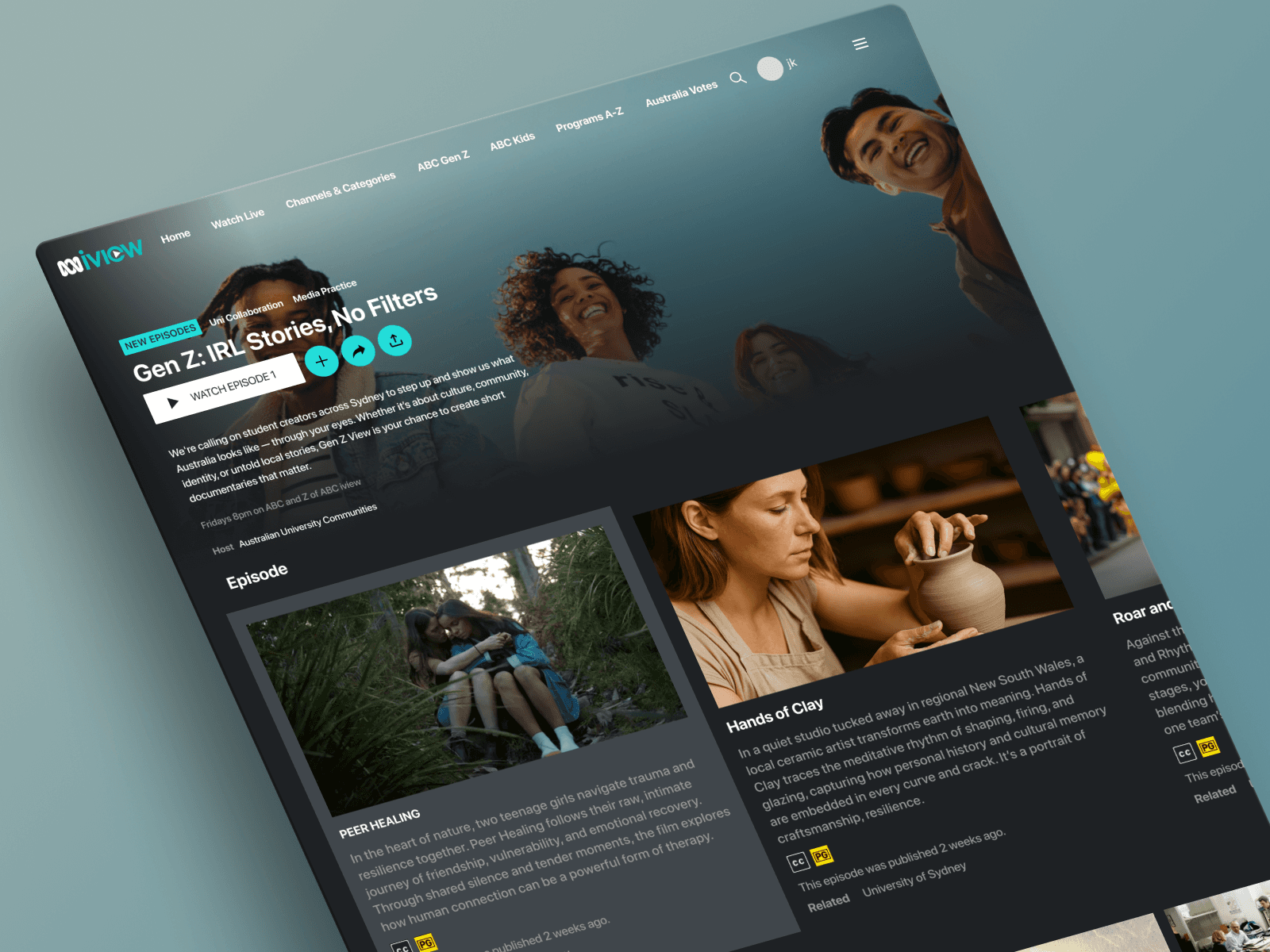
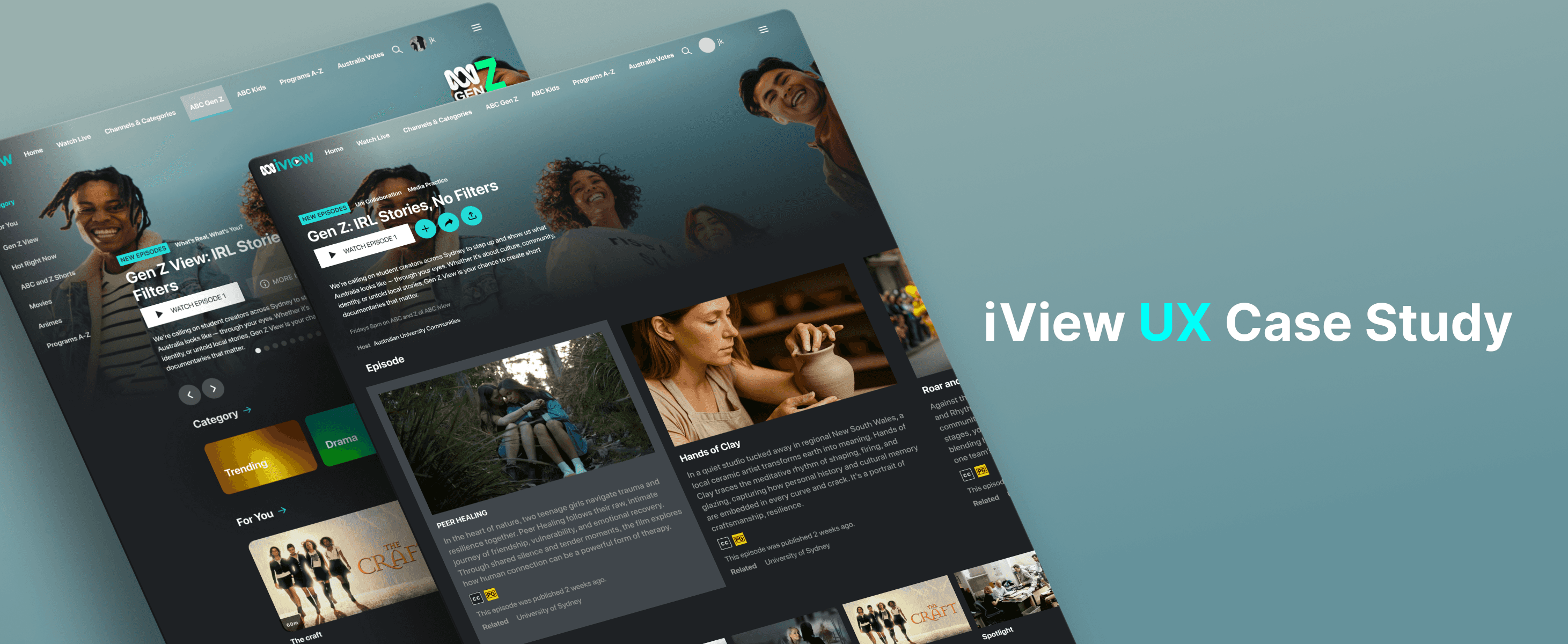
This project reimagines ABC iView to engage Gen Z through authentic, interactive, and community-driven experiences. By introducing a curated Gen Z channel and a student-led Documentary Week, the redesign fosters trust, creativity, and cultural connection.
Problem
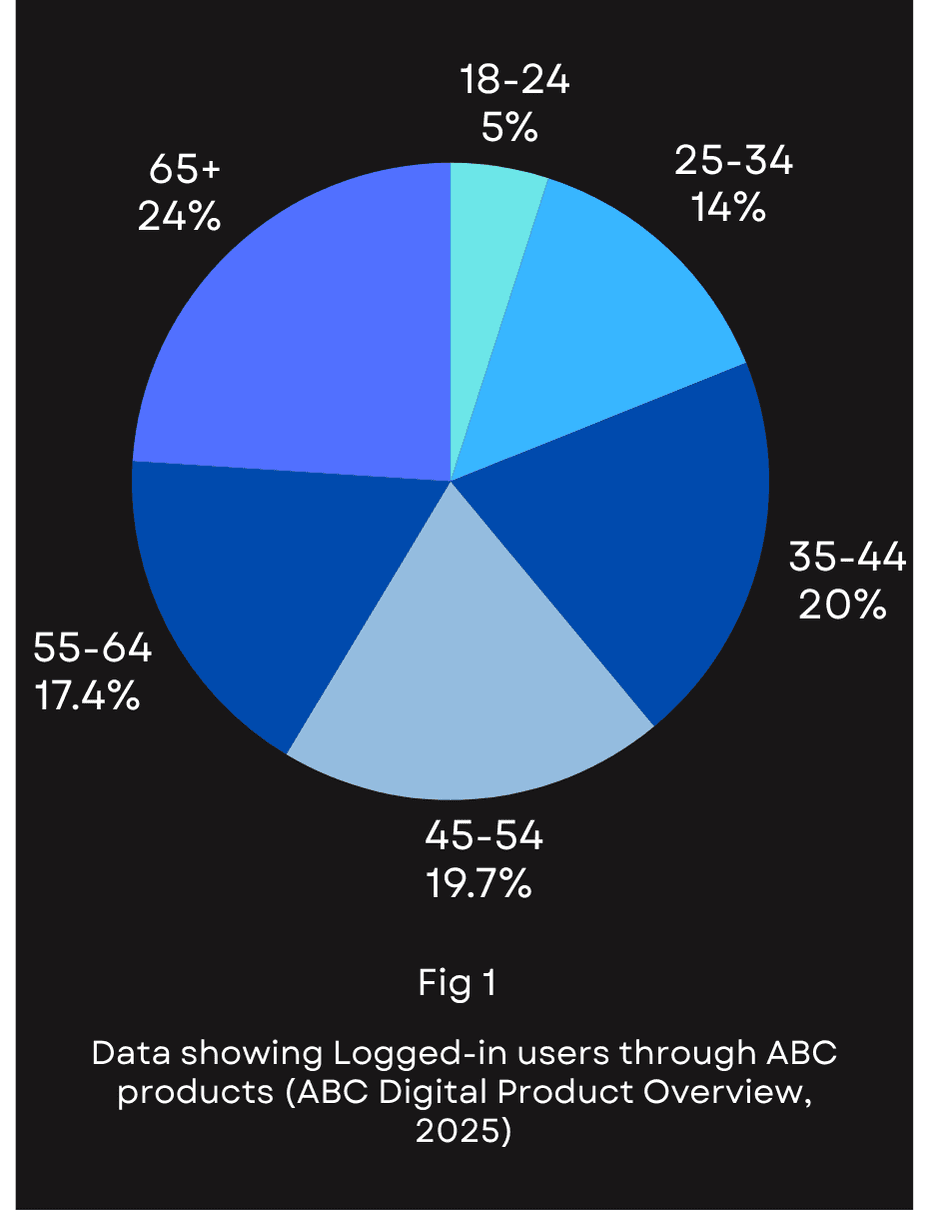
ABC has long been one of the most broadly consumed news sources in Australia, however, young people show little interest in it. Research shows that users aged 18 to 24 make up the smallest proportion of ABC’s overall audience (Fig 1). This indicates that ABC’s brand image is gradually losing its appeal among younger generations. In terms of content structure, platform interaction, and visual expression, ABC has yet to meet the deeper needs of young people for personalization, a sense of participation, and cultural identity.
Challenges
Gen Z’s expectations for digital platforms are rapidly increasing, demanding experiences that are more trustworthy, relatable, and easy to use.
ABC is still widely perceived as a traditional news organization, which limits its appeal to younger audiences.
The platform struggles to represent and engage with the diverse voices of local Australian youth
Approach
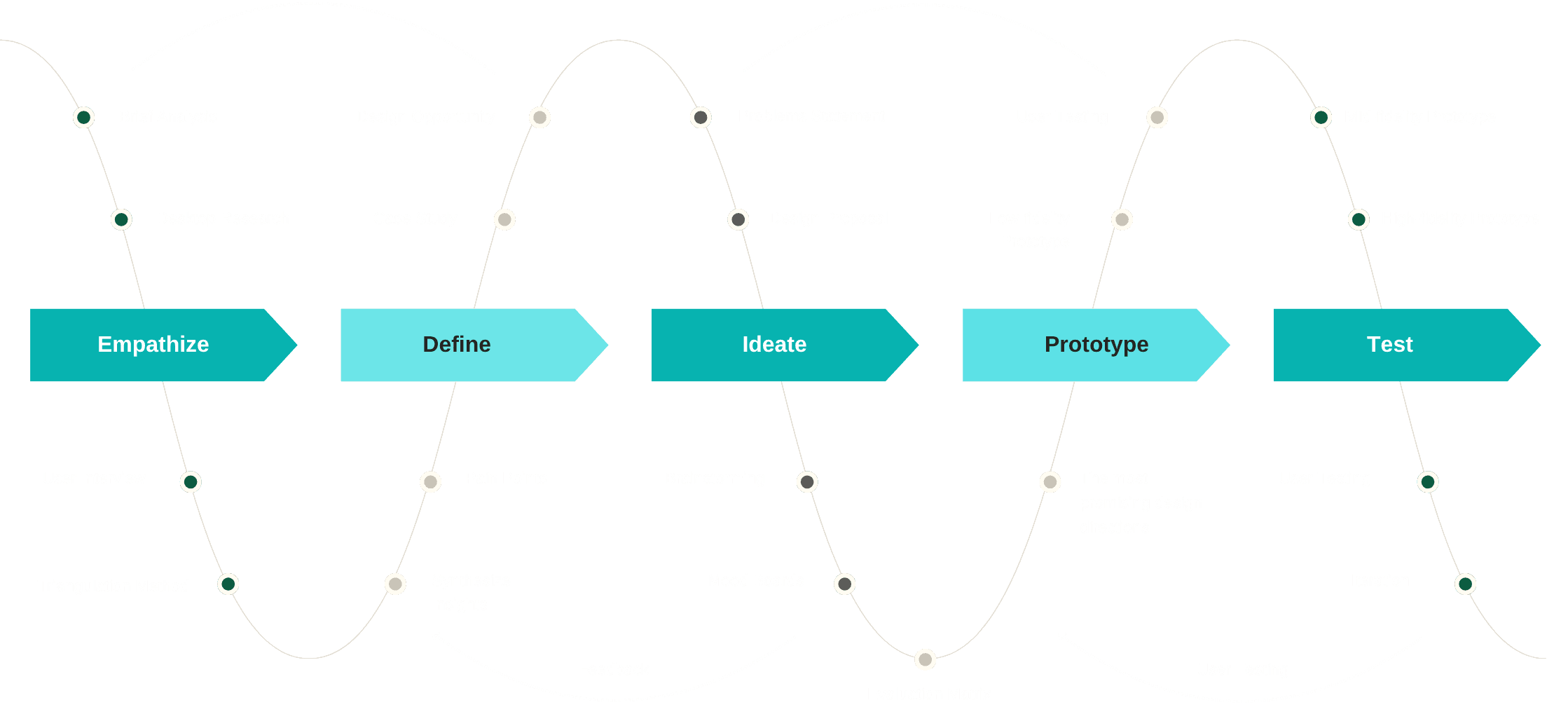
We follow the Human-Centered Design (HCD) framework from Stanford’s d.school, grounding every decision in real user needs. Our process is iterative rather than linear—each stage loops back as new insights emerge. During Ideation, for example, we use an Evaluation Matrix to quickly integrate user feedback and adjust our concepts, ensuring the design direction stays closely aligned with user expectations.
01 Empathize
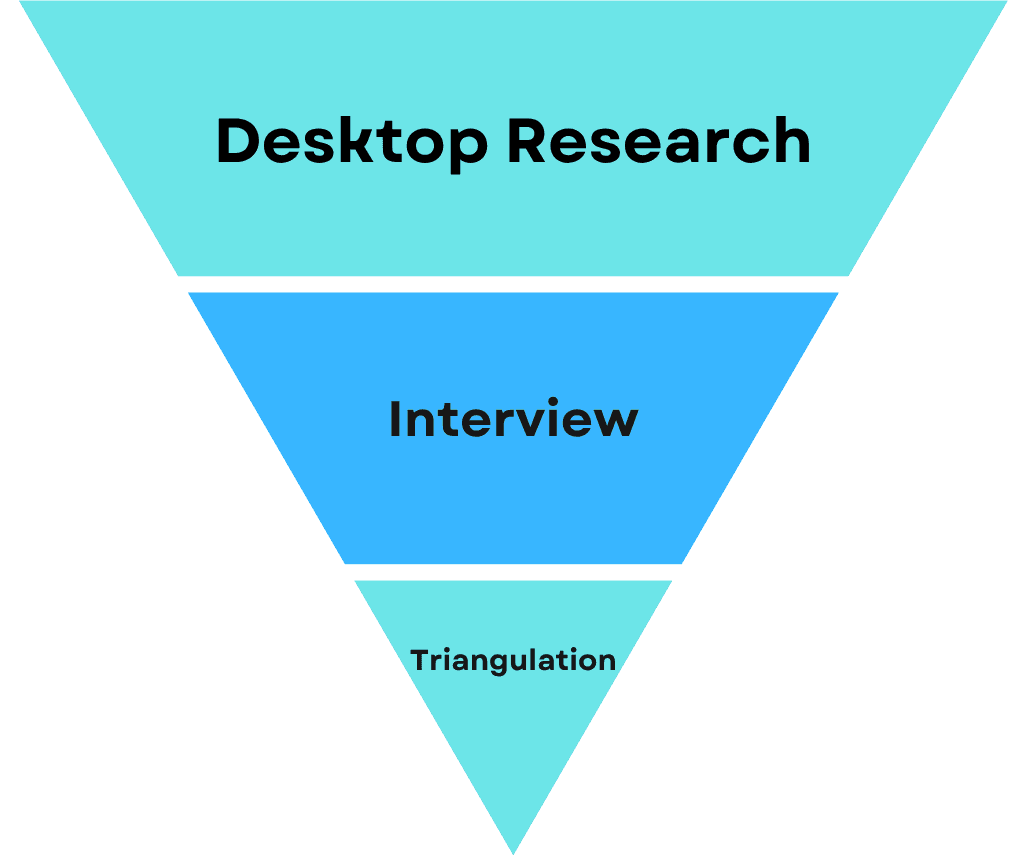
We began the Empathize phase with Desktop Research to understand industry trends, competitor strategies, and the media habits of younger audiences.
We then conducted in-depth User Interviews to explore how target users perceive ABC and what they expect from media content.
Finally, we applied Triangulation to cross-check insights from all sources, ensuring the identified patterns and pain points were accurate and trustworthy.
02 Define
In the Define phase, we used Affinity Diagramming and the Three-Level Insight Model to organize and synthesize our research findings, revealing deeper user needs and opportunities.
Based on these insights, we created focused Problem Statements and open-ended “How Might We” questions to guide and refine our design direction.
03 Ideate
In the Ideate phase, we generated multiple creative directions through Brainstorming and Mood Boards.
We then invited target users to rate these ideas using an Evaluation Matrix, helping us identify the most promising, user-aligned concepts.
04 Prototype
In the Prototype phase, we turn the most promising ideas into simple conceptual models.
These early prototypes are not final designs—they help us explore, test assumptions, and understand real user reactions so we can refine the direction quickly.
05 Test
In the Test phase, we present prototypes to target users and observe how they interact with them, revealing opportunities for further refinement.
This feedback loop continues throughout the project—we gather user input at every stage to ensure our design decisions remain aligned with real user needs.
Voices
Pain Points
Trust Gap
Lack of Interactivity & Self-Expression
Unappealing Content for Younger Audiences
Insight
Trust is shifting from objective credibility to subjective familiarity.
Young people want connection with content rather than passively receiving information. They are used to commenting, sharing, and engaging in discussions on social media — interaction is a key way for them to build a sense of belonging and emotional connection.
Design opportunities
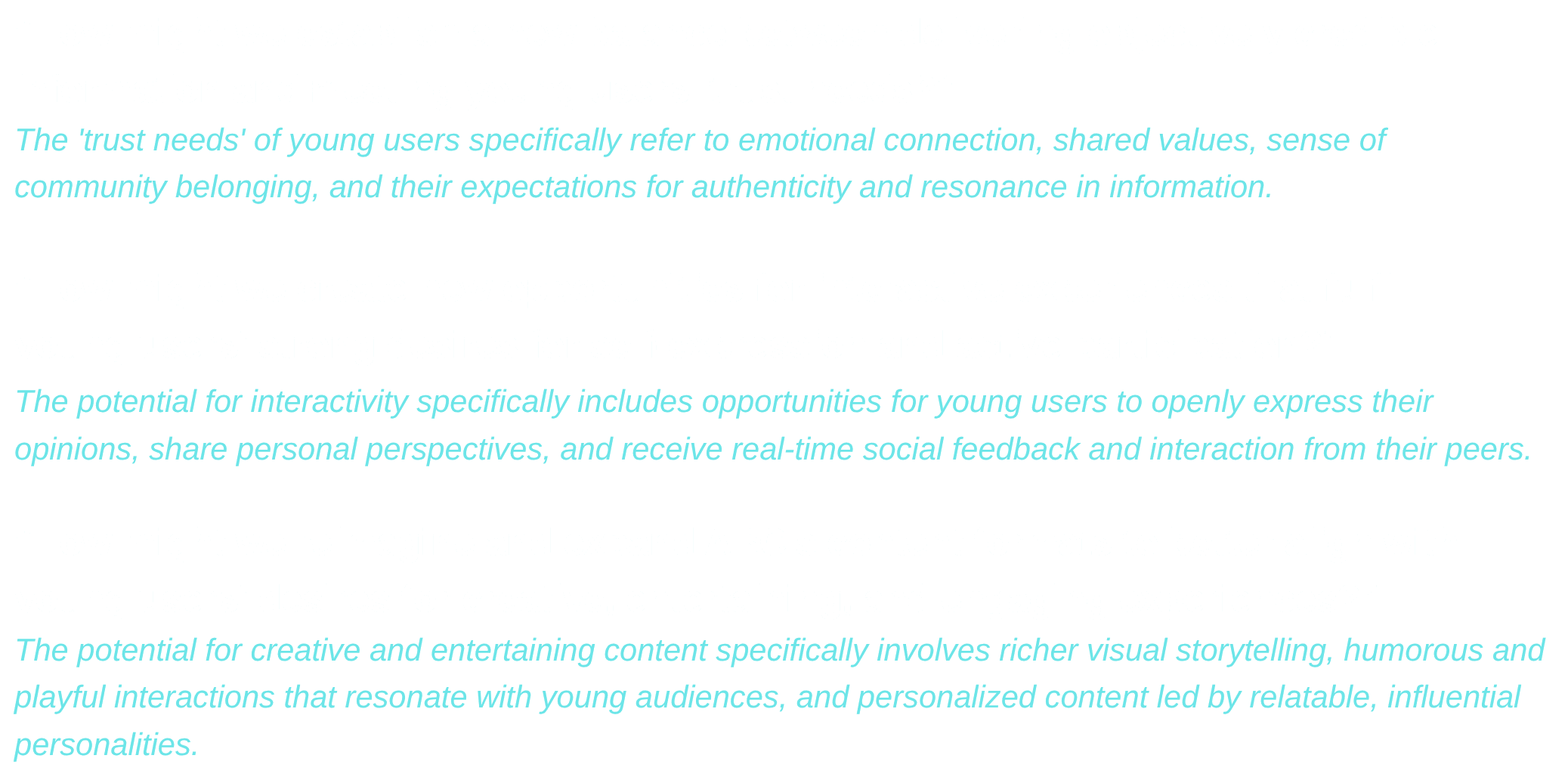
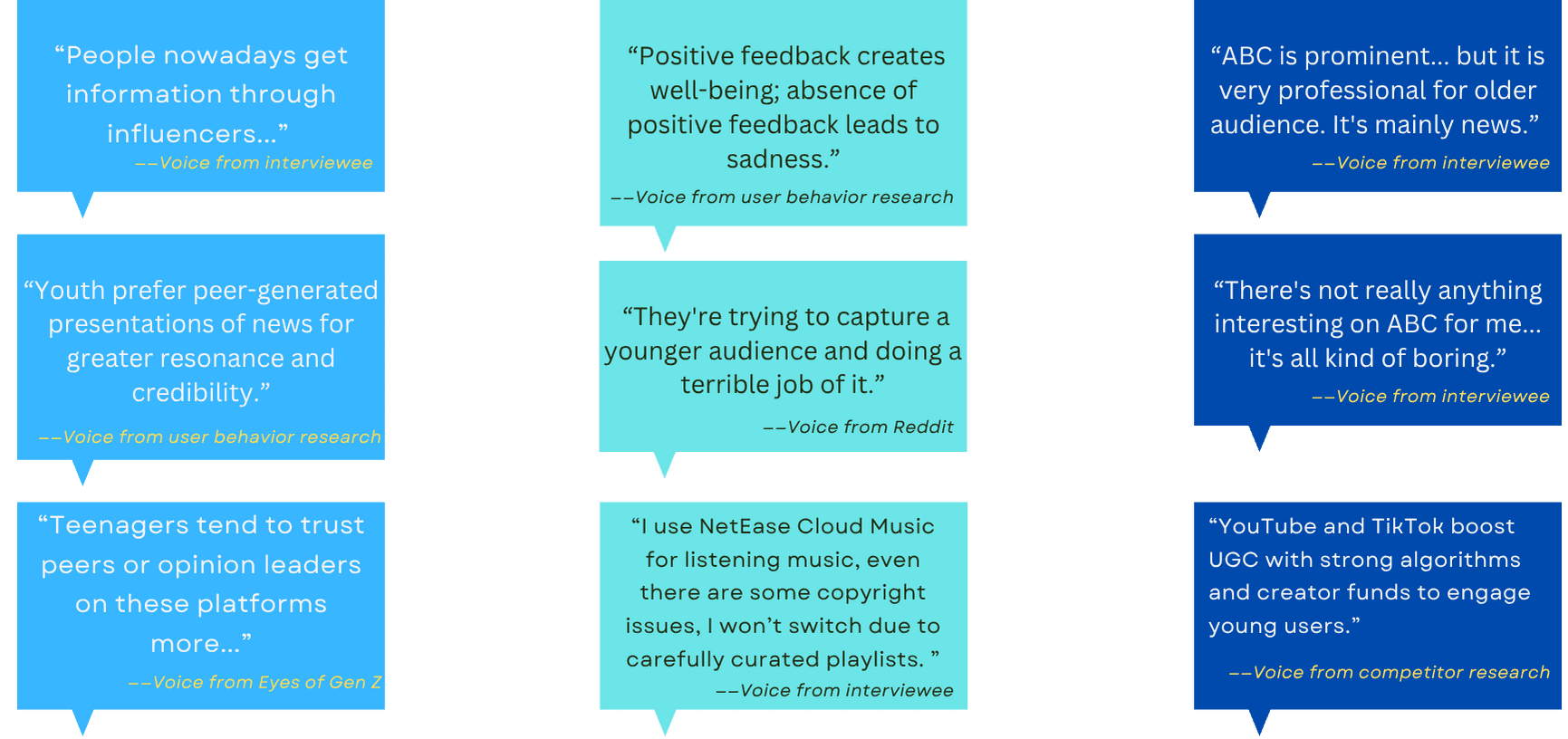
Our research shows a decline in young users’ interest in ABC, driven by shifting media preferences. Younger audiences tend to trust information from peers and influencers over traditional institutions, valuing emotional resonance, shared values, and a sense of community. They also expect platforms to support self-expression, interaction, and instant feedback—areas where ABC currently offers limited opportunities. Many perceive ABC as “uninspired,” “dull,” or “for older people,” and feel the content lacks the visual appeal, entertainment value, and personalization they seek.
If ABC leverages these gaps, it can build a new brand experience that combines credibility with emotional relevance. This would differentiate ABC from both purely entertainment platforms (e.g., Netflix, TikTok, YouTube) and traditional news outlets, creating a more engaging, trustworthy, and youth-aligned identity that better attracts and sustains young users’ attention.
Goals
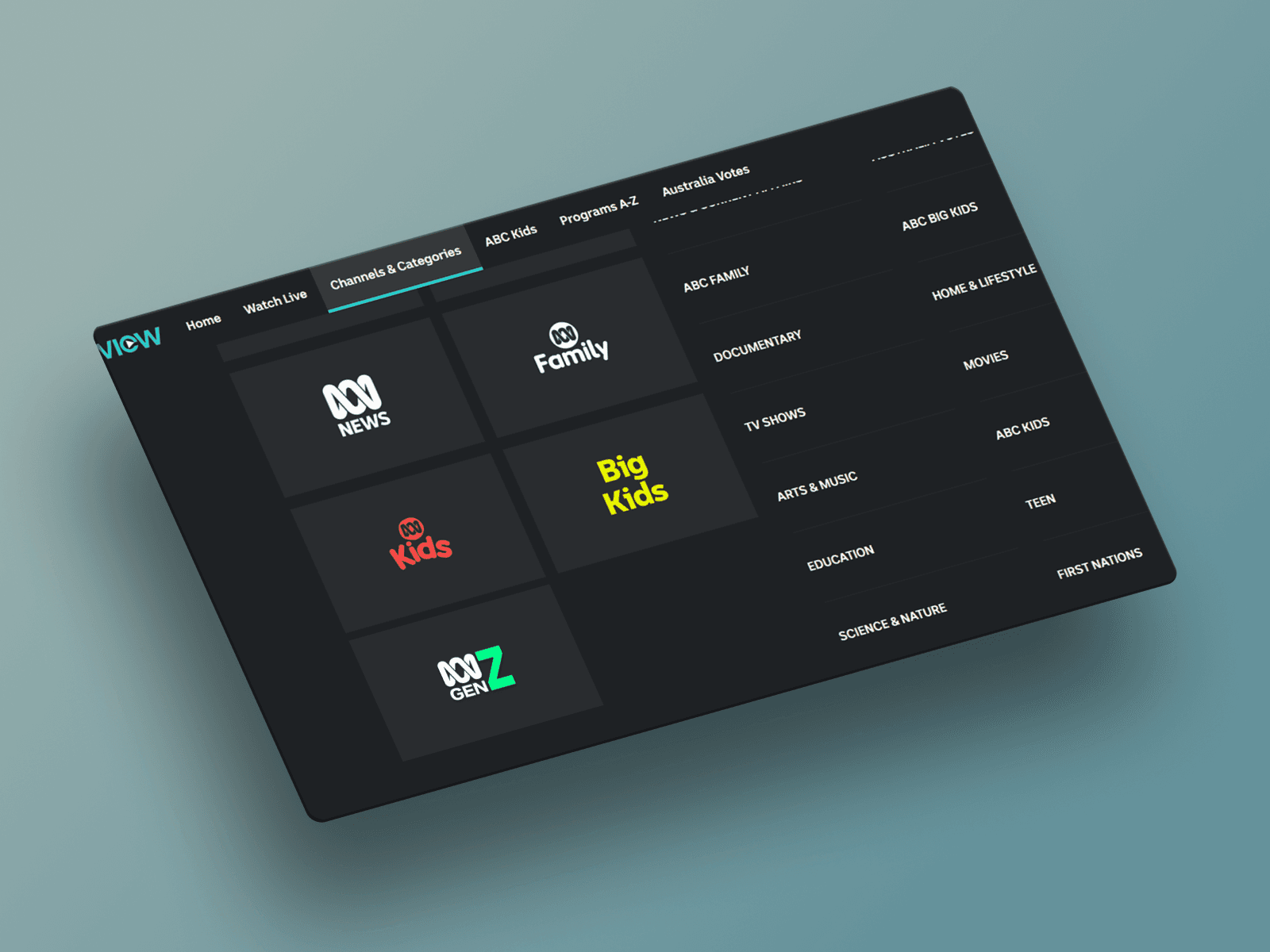
The aim is to create a Gen Z–focused channel with curated content and a creation hub that encourages self-expression and local storytelling, making ABC more relevant to young Australians.
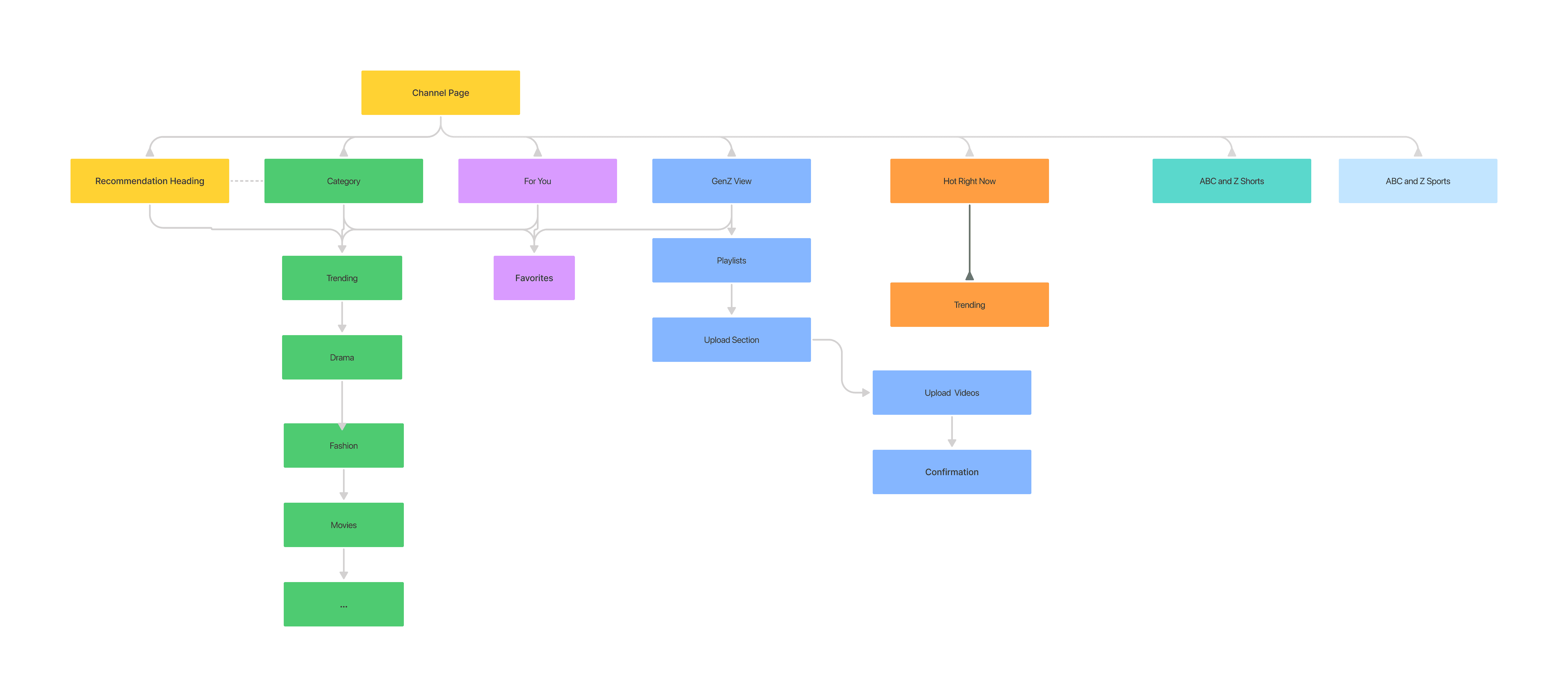
Information Architect
Deliverables